20th December 2025 – (Cupertino) A substantial leak from inside Apple’s development ecosystem has confirmed work on a foldable iPhone, a second-generation AirTag and a wide range of new devices spanning Macs, iPads, wearables and smart home products.
The disclosures originate from an Apple prototype that was reportedly sold with an early internal build of what is now iOS 26. The buyer is understood to have extracted the software and shared it, allowing researchers to examine references to unreleased hardware and upcoming features.
The operating system build is labelled 23A5234w, predating the first official developer beta of iOS 26 (23A5260n). At the time the software was compiled, Apple was still using its old internal naming scheme and referring to the platform as “iOS 19”, which is how it appears within the system.
An anonymous source supplied MacRumors with a detailed list of device identifiers and features found within this early firmware. The code strings — Apple’s internal codenames — match or expand upon references that have previously surfaced in accidental updates and in reporting by Bloomberg’s Mark Gurman. While many of these products have been rumoured for months or even years, their appearance in live Apple software is being treated in industry circles as strong evidence that they are now in active development.
The leak confirms that Apple is preparing AirTag 2, listed under the identifier B589, alongside a refreshed Apple Studio Display (J427 and J527) and a new Apple TV model (J355). Two variants of an as-yet-unannounced home hub (J490 with a base and J491 as a mounted unit) also appear, together with an unclassified home accessory coded J229. Observers suggest this could be a standalone dock for the mounted hub or a separate product entirely, such as the long‑rumoured Apple home camera. There is also a reference to a “tabletop robot” (J595), hinting at a potentially radical new category for the company, plus a second-generation HomePod mini (B525).
On the tablet side, references to an “iPad 12” (J581, J582 for Wi‑Fi and cellular variants) appear alongside multiple models of an M4‑powered iPad Air. These are listed under the codes J707, J708, J737 and J738, covering both 11‑inch and 13‑inch sizes in Wi‑Fi and cellular configurations, indicating Apple intends to continue pushing its mid‑range tablets towards higher performance.
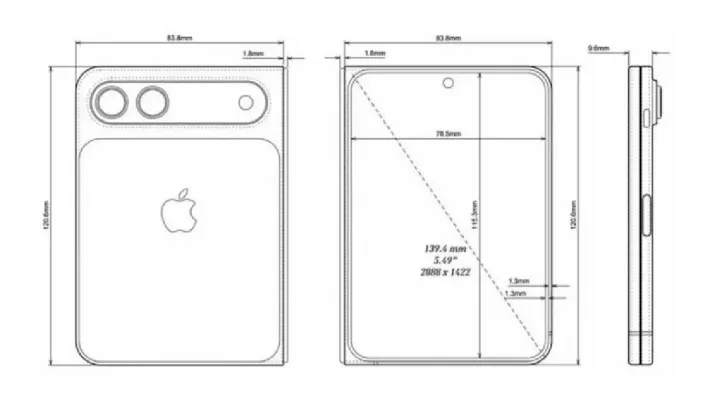
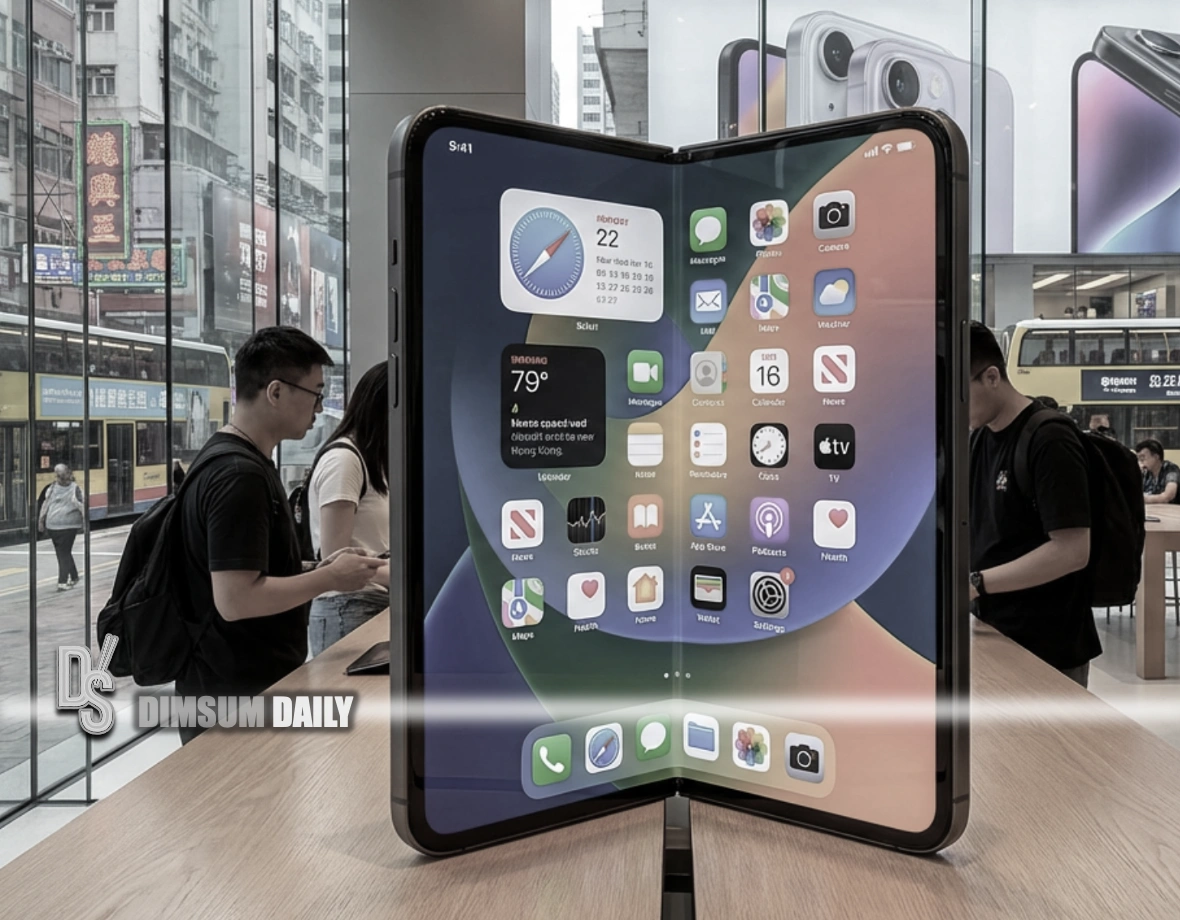
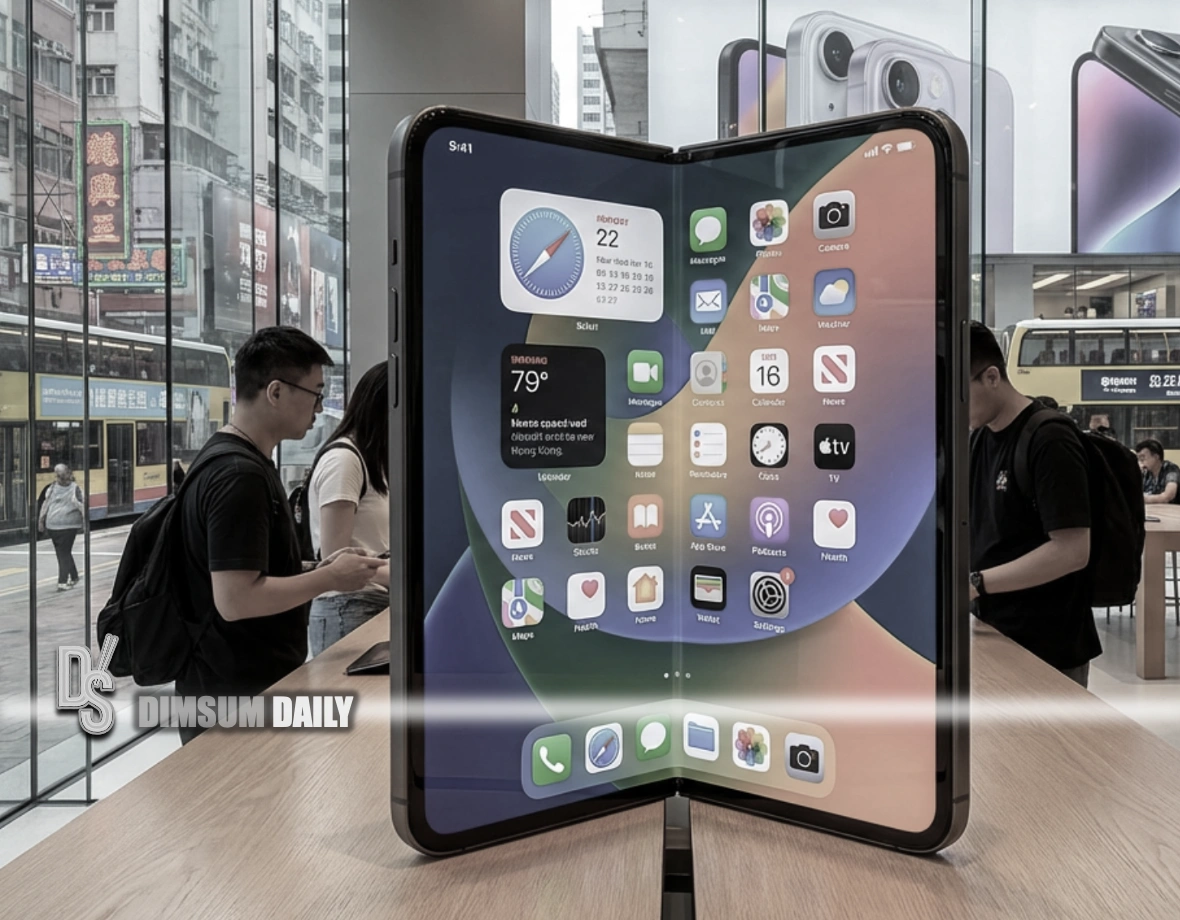
The iPhone line-up in the leak is particularly striking. Strings point to an “iPhone 17e” (V159), an “iPhone Air 2” (V62), an “iPhone 18 Pro” (V63) and an “iPhone 18 Pro Max” (V64). The “Air 2” reference is understood to predate Apple’s internal decision to delay that specific model, showing how plans evolve between early software builds and final release. Of greatest interest is a device tagged V68, which is explicitly described as a foldable iPhone, the clearest software‑level indication yet that Apple intends to compete directly with foldable handsets from Samsung and other rivals.
The Mac roadmap embedded in the code is equally expansive. It includes a lower‑cost MacBook powered by an A18 Pro chip (J700), suggesting a renewed push into more affordable portable Mac hardware. There are multiple references to M5‑based machines: 14‑inch and 16‑inch MacBook Pro models with M5 Pro and M5 Max chips (J714c, J714s, J716c, J716s), M5 MacBook Air laptops in 13‑inch and 15‑inch sizes (J813, J815), an M5 Mac Studio in Max and Ultra variants (J775c, J775d), and an M5 Mac mini with both standard and Pro chip options (J873g, J873s). Beyond that, Apple is clearly planning for the next generation, with a 14‑inch MacBook Pro running an M6 chip (J804) and further 14‑inch and 16‑inch models carrying M6 Pro and M6 Max processors (K114c, K114s, K116c, K116s).
In wearables and spatial computing, the firmware references a “Vision Air” headset (N100), described as a lighter and more affordable counterpart to the Vision Pro. Several AR glasses initiatives also appear, illustrating the breadth of experimentation taking place within Apple’s labs. A lightweight AR glasses prototype (N421) and a set of Mac‑tethered AR glasses (N107) are both said to have been abandoned. A cheaper Vision Pro model (N109), apparently treated internally as a second‑generation device distinct from Vision Air, remains active in the code. Perhaps most notably, a pair of “AI smart glasses” originally tagged as N50 and now relabelled N401 appears to be positioned as a direct competitor to Meta’s Ray‑Ban smart glasses.
Apple Watch references include the Apple Watch Series 12, with Wi‑Fi and cellular variants indicated by N237 and N238, and a future Apple Watch Ultra 4 (N240), confirming that Apple intends to keep iterating both its mainstream and rugged, high‑end wearable lines.
The software also contains codenames for an array of upcoming chips. These include a third‑generation Ultra Wideband (U3) chip (T2034), the M5 family — Pro, Max and Ultra (T6050) — the M6 (T8152), and next‑generation iPhone processors A20 and A20 Pro (T8160). A new S‑series chip for Apple Watch, S11 (T8320), is likewise identified, signalling another architecture refresh for the company’s smartwatch platform.
Alongside these clearly identifiable products, the leak lists several internal codes — N110, N209, N216, J349, J190 and J226 — that are not yet associated with any known hardware projects. These may represent early‑stage experiments, future accessories, or devices so far off Apple’s public roadmap that their nature has not yet been signalled through supply‑chain or analyst reports.
Industry sources suggest that some of the products named in the software, such as AirTag 2, new iPads and the home hub devices, are likely to appear in the earlier part of 2026. Others, including M6‑class Macs and more advanced spatial computing hardware, are thought to be positioned for late 2026 and beyond. The internal code itself does not contain launch dates, and Apple is known for frequently revising timelines, cancelling prototypes, or postponing devices even at relatively advanced stages of development.