
9th December 2025 – (Hong Kong) Collapsing of creative direction usually happens at the pre-production stage when details of the scenes are unclear. Lack of information results in mismatched graphics, imbalanced timing and unclear transitions. CapCut assists creators to overcome these gaps by creating structured storyboards that emphasise how each moment ought to appear and feel. There are clear scene notes, which lead through the entire process and avoid possible confusion that can slow down the production.
Learning the role of scene notes in visual planning
Scene notes serve as a communication point during planning. Concrete descriptions that define intent, mood and direction are beneficial to every project. The ideas are perceived differently by scriptwriters, editors, and designers and thus written notes bring them all together. Shot lists are concerned with framing and angles whereas scripts are concerned with dialogue and narrative. Scene notes unite both of these aspects, making sure that every individual understands the visual logic of every piece. These notes maintain the teams on track, minimise confusion, and emphasise the reason behind every action on the screen.
Distinctions in scene notes, shot lists, and scripts
Scripts tell of what occurs, but not always how the specific scenes are supposed to appear. Shot lists are the descriptions of camera movements or lenses, but they do not contain any emotional or thematic information. Scene notes fill these gaps with context. They detail pace changes, tonal changes, or compositional requirements. This advice assists editors and designers to maintain consistency of the message. The final visual flow is true to its original idea when scene notes are left detailed and accurate.
The power of AI-generated scene notes to creative direction
CapCut is a tool that helps creators with automatic script-to-storyboard tools which read between the lines in terms of tone and pacing. The AI writer helps convert rough concepts into meaningful notes that match the intended style. This help simplifies the misunderstandings and clarifies the priorities of the creative before production. The script is read by CapCut and transition points are identified where the transitions are slowing or increasing in intensity. It is an act that makes the will keen and removes speculation in planning. You get guidance that is focused and precise even where the thought starts loose.
Arranging ideas into visual blocks with CapCut
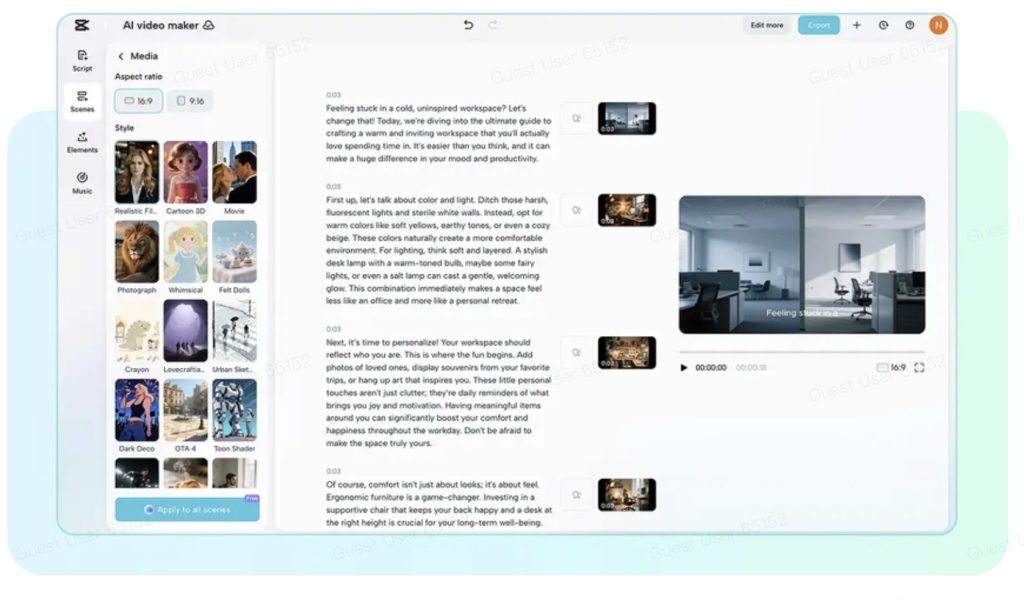
CapCut transforms initial ideas into structured visual forms and forms a solid foundation of production. Midway through the process, creators notice how structured guidance improves clarity, especially when an AI storyboard supports the visual outline. Scene breakdowns represent the automatic analysis of the narrative flow and guarantee the fit of every block to the general vision. The direction is further enhanced by smart caption layering, which ensures visual pacing is matched with text timing. CapCut adds clarity by adjusting the position of the captions so that they can be read in various layouts.

Transforming sloppy ideas into systematised visual groupings
Most concepts start out as notes. CapCut organises these fragments into visual blocks that reinforce the creative message. Every block underlines what the viewer is to feel or comprehend at the moment. This is an organisation that assists in continuity. CapCut also indicates the starting and ending points of each scene, which will help in muddling over production. The features of the site allow creators to enhance the structure without additional manual work, making the planning process effective.
Taking advantage of automatic scene breakdowns to be clear
Automatic scene breaks call attention to the important beats in the story. This will guide you on how one moment will lead to the other. CapCut breaks down scripts into manageable segments and assigns visual clues that aid in the story. This approach minimises the possibility of ambiguous pacing. It is also easy to edit scenes since each part is independent but related to the overall direction.
Smart caption overlay to strengthen creative direction
Captions assist in reinforcing the message and give timing directions to editors and animators. CapCut layers captures captions dynamically but their placement changes according to the composition of the scenes. This enhances readability and minimises clutter. Emotional flow and tone are supported by balanced captions, which make every moment strike the appropriate chord. The system makes the text consistent with the visuals.
Steps to keep creative direction clear with AI storyboard scene notes
Step 1: Open your creative workspace
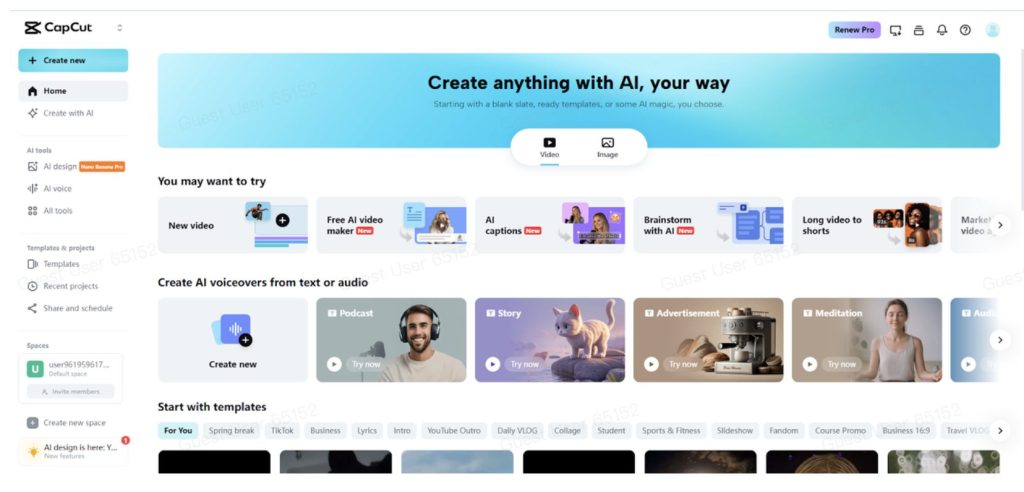
Start by opening the CapCut online video editor and moving to the main dashboard. Click on the “Free AI video maker” to instantly unlock all AI-powered creation features. From the available options, select “Instant AI video” to begin shaping your storyboard with guided tools.
Step 2: Shape the vision with script input
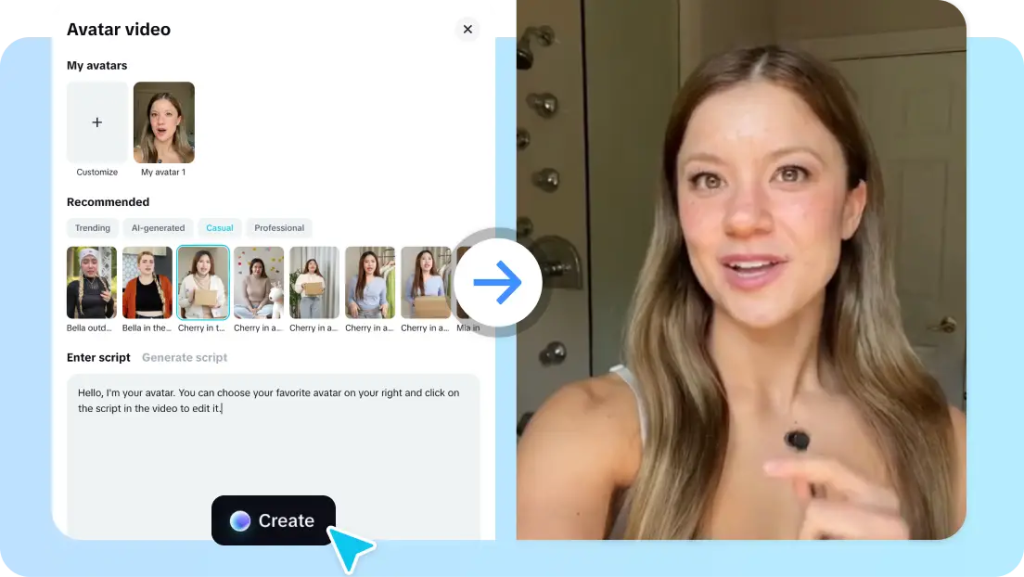
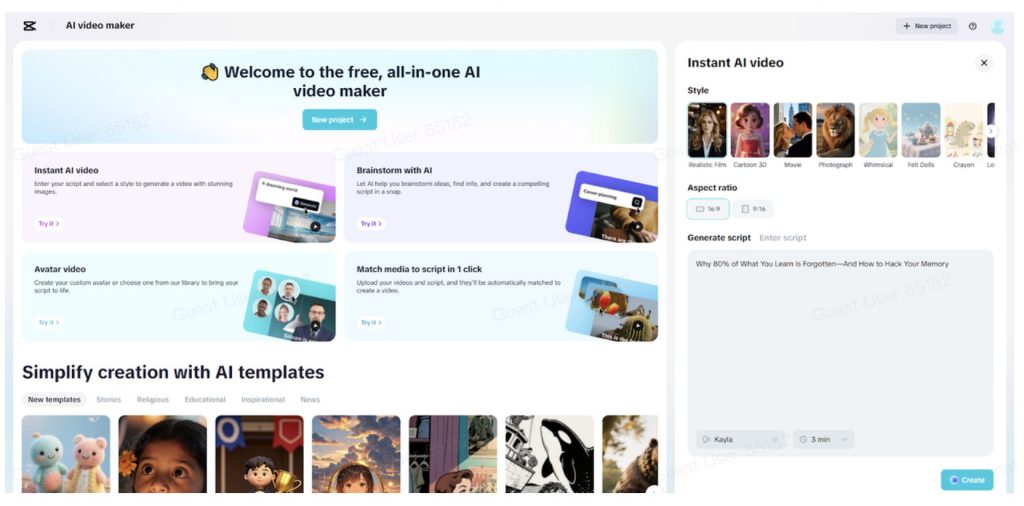
Choose the visual style that fits your creative direction. Add your concept inside the “Enter script” box, or use “Generate script” to let AI structure your idea into clear storyboard notes. Pick an aspect ratio such as 16:9 or 9:16 for accurate previews. Set the storyboard length and adjust narration or tone. Then click “Create” to generate a clean storyboard with scene-by-scene visual guidance.
Step 3: Refine scenes with audio and captions
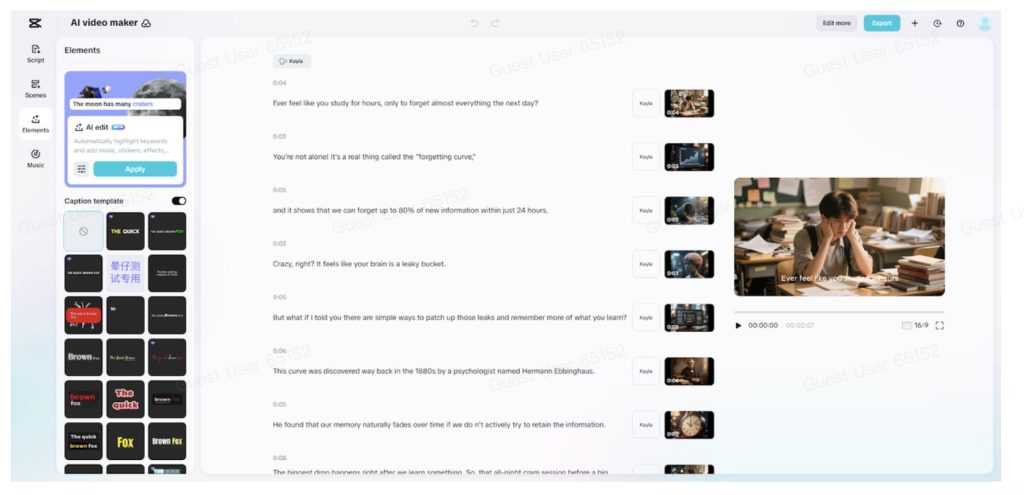
Click “Create” to open the full storyboard layout with visual cues. Use the “Music” panel to add a suggested track from CapCut’s library. Visit “Elements” to select a caption template that supports scene clarity and direction.
Step 4: Final export for review
Once everything looks aligned, click “Export” to set resolution, format, and frame rate. Click “Export” again to save the final video with clearly defined storyboard notes for review or sharing.
Stepping up with purposeful annotations to enhance message delivery
Good scene notes emphasise the intent through brief and specific descriptions. Good annotations characterise mood, pacing and meaning. CapCut assists this through caption tools that provide directional cues. These signals strengthen changes and assist in developing momentum between scenes. Intentional notes are the means to lead editors and animators to the right interpretation. This is done to make sure that each moment carries the desired message.
Ensuring visual consistency across platforms
Consistency in terms of visuals is important in the publication of various platforms. The notes are clear enough to guide creators to alter styles without losing their path. Framing ratios like 16:9, 9:16 and 1:1 differently are necessary, but solid notes make the message coherent. CapCut facilitates this adjustment through ratio tools which maintain alignment. The presentation of each version is controlled using scene notes and the chances of conflicting visuals are reduced.
Enhancing team cooperation through notes
CapCut offers collaboration in the clouds that maximise team coordination. Distributed storyboards give all the same direction and reduce miscommunication. Clear notes minimise the revision cycles since all the contributors are aware of the desired outcome. This shared knowledge encourages faster achievement and improves creative cohesion.
Conclusion
Existing scene notes maintain a consistent level of creativity during pre-production and final edit. The use of AI in planning shortens confusion, enhances pacing, and promotes transitions. CapCut provides creators with direction-driven storytelling, a structured workflow. Clear notes assist any project in speeding up and keeping on track. When guidance is accurate and well defined creators have greater visual flow.
This article is for informational and promotional purposes only. We are not affiliated with, sponsored by, or endorsed by CapCut. References to CapCut do not constitute an endorsement or recommendation of its products or services. Readers should conduct their own due diligence and use any third‑party tools at their own discretion.
